
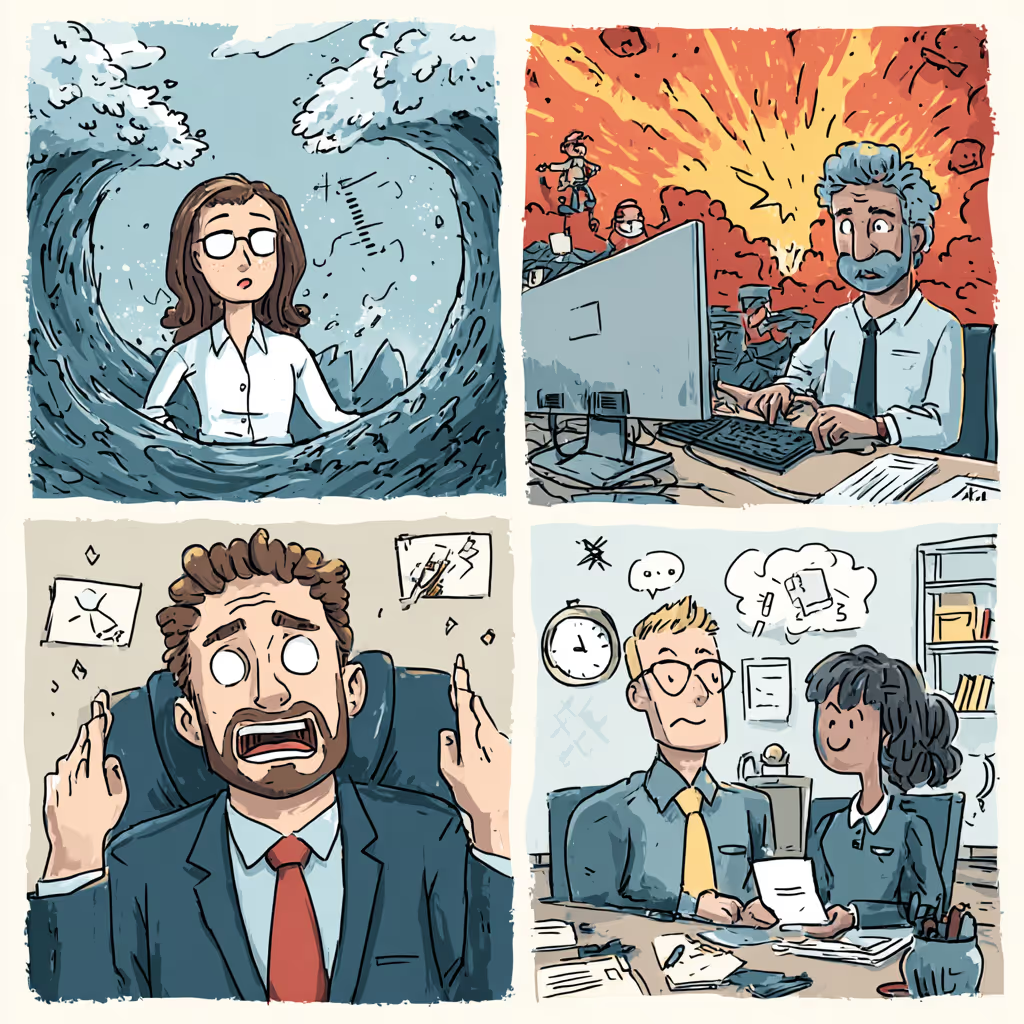
Workplace pressure can either break you or build you. The difference comes down to mental resilience, the ability to adapt, recover, and maintain your performance when stress levels spike. This skill separates professionals who thrive from those who burn out.
Mental resilience isn't about ignoring stress or pushing through pain. It's about developing strategies that help you bounce back quickly, think clearly under pressure, and turn challenges into growth opportunities. Whether you're leading a team, launching a business, or managing complex projects, building resilience keeps you effective when it matters most.
What Is Mental Resilience in the Workplace?
Mental resilience refers to your capacity to adapt, recover, and maintain performance during workplace stress and adversity. It's not a personality trait you either have or don't have. Instead, it's a set of skills you can develop and strengthen over time.
Resilient professionals can regulate their emotions during tense situations. They show cognitive flexibility when plans fall apart. Most importantly, they bounce back from setbacks while maintaining their productivity and wellbeing.
The key difference? Resilient professionals view pressure as a catalyst for growth rather than a threat to their wellbeing. This mindset shift changes everything about how you experience and respond to workplace challenges.
Why Mental Resilience Matters for Professional Success
High-pressure environments can lead to burnout, decreased productivity, and compromised decision-making without proper resilience strategies. The costs show up in your health, your relationships, and your career trajectory.
Research shows that mentally resilient professionals experience 31% higher productivity and significantly lower stress-related health issues. These aren't small differences. They represent the gap between sustainable success and eventual breakdown.
Building resilience enables leaders and entrepreneurs to navigate uncertainty with clarity and maintain consistent performance. When market conditions shift or unexpected problems emerge, resilient professionals adapt quickly instead of freezing or panicking. This ability to stay effective under pressure becomes your competitive advantage.
Core Components of Workplace Mental Resilience
Emotional Awareness and Regulation
Recognizing emotional triggers in stressful situations allows for proactive response rather than reactive behavior. When you know what sets you off, you can prepare better strategies for those moments.
Practicing self-awareness helps professionals identify early warning signs of overwhelm before they escalate. You might notice physical tension, racing thoughts, or irritability appearing before a full stress response takes over. Catching these signals early gives you time to adjust.
Techniques like mindful breathing and emotional labeling strengthen your capacity to stay composed under pressure. Simple practices make a real difference. When you name what you're feeling, you create distance between the emotion and your response to it.
Cognitive Flexibility and Reframing
The ability to shift perspectives transforms obstacles into solvable challenges rather than overwhelming problems. This mental agility doesn't mean ignoring real difficulties. It means looking at them from multiple angles to find workable solutions.
Cognitive reframing involves questioning automatic negative thoughts and replacing them with constructive alternatives. Instead of thinking "This is impossible," you might ask "What would make this possible?" or "What's one small step I could take right now?"
This mental agility supports better problem-solving and reduces the psychological impact of workplace stressors. When you can see multiple paths forward, you feel less trapped by circumstances. Your brain stays in solution mode instead of panic mode.
Strong Support Networks and Boundaries
Building meaningful professional relationships creates a safety net during challenging periods. The people around you can offer perspective, practical help, or simply confirmation that you're not alone in facing difficulties.
Establishing clear boundaries between work and personal life protects mental energy and prevents chronic stress accumulation. Boundaries aren't selfish. They're essential for maintaining the energy you need to perform well over the long term.
Seeking support from mentors, coaches, or trusted colleagues reinforces resilience through shared experiences and guidance. Others have faced similar challenges and survived. Their experiences can light your path forward.
Practical Strategies to Strengthen Mental Resilience
Develop a Daily Mindset Practice
Start each day with intention-setting exercises that align your actions with your professional values and goals. Taking five minutes to clarify what matters most today helps you make better decisions when pressure builds.
Incorporate 10 to 15 minutes of mindfulness meditation to enhance focus and emotional stability. You don't need special equipment or training. Simple breathing exercises while sitting quietly create measurable changes in how your brain responds to stress.
Regular mindset practice rewires your brain to respond to pressure with calm determination rather than anxiety. Consistency matters more than duration. A short daily practice beats an occasional long session.
Build Recovery Routines Between High-Stakes Tasks
Schedule brief mental recovery periods throughout your workday to prevent cognitive fatigue. Your brain needs breaks to maintain quality performance. Working for hours without pause doesn't make you more productive. It makes you more prone to mistakes.
Use techniques like progressive muscle relaxation or short walks to reset your nervous system. Physical movement helps discharge stress hormones that accumulate during intense work. Even a five-minute walk can shift your state.
Strategic recovery prevents decision fatigue and maintains performance quality during extended pressure periods. Think of recovery as part of your work strategy, not time stolen from productivity. The quality of your output depends on the quality of your mental state.
Embrace Challenge-Driven Growth
Redefine stressful situations as opportunities to expand your capabilities and prove your resilience. This reframing doesn't make challenges easy. It makes them meaningful. When pressure serves a purpose, it feels different.
Track your progress through difficult periods to build confidence in your ability to handle future challenges. Keep a record of obstacles you've overcome. When new difficulties arise, you'll have evidence that you can handle them.
This growth mindset approach transforms pressure from a burden into a professional development tool. Every challenge you navigate successfully builds your confidence for the next one. You're not just surviving stress. You're using it to become more capable.
Master Energy Management Over Time Management
Focus on optimizing your energy levels throughout the day rather than simply filling time slots. Time management assumes all hours are equal. They're not. Your capacity varies significantly based on energy levels.
Align your most demanding tasks with your peak performance hours for maximum effectiveness. If you're sharpest in the morning, don't waste that time on emails. Save your most challenging work for when your brain works best.
Protect your physical health through consistent sleep, nutrition, and movement habits that fuel mental resilience. Your mental performance depends on your physical foundation. You can't think clearly when you're exhausted, poorly nourished, or sedentary.
Resilience-Building Techniques for Entrepreneurs and Leaders
Decision-Making Under Uncertainty
Develop frameworks that allow you to make confident decisions even with incomplete information. Waiting for perfect clarity often means missing opportunities. Strong decision-making means acting on the best available information.
Practice scenario planning to mentally prepare for multiple outcomes and reduce anxiety about the unknown. When you've thought through various possibilities, you're less likely to panic when things don't go as planned.
Strong decision-making resilience separates effective leaders from those paralyzed by pressure. Your team needs you to make calls, even difficult ones. Indecision creates more stress than making an imperfect choice and adjusting as you go.
Cultivating Psychological Safety in Your Team
Leaders who model resilience create environments where team members feel safe to take risks and learn from failures. Your team watches how you handle pressure. When they see you managing stress constructively, they learn to do the same.
Transparent communication about challenges normalizes struggle and reduces stigma around seeking support. Pretending everything is fine when it isn't creates isolation. Honest communication about difficulties builds trust and collective resilience.
Building organizational resilience starts with leadership that demonstrates healthy coping strategies. If you want a resilient team, become a resilient leader first. Your behavior sets the standard for how pressure gets handled.
Learning from Setbacks Without Self-Criticism
Adopt a reflective practice that extracts lessons from difficulties without harsh self-judgment. There's a difference between learning from mistakes and beating yourself up over them. One builds resilience. The other erodes it.
Separate your identity from your performance to maintain self-worth during professional challenges. A failed project doesn't make you a failure. A difficult quarter doesn't define your value. Keep your self-worth independent of outcomes.
Constructive self-reflection builds resilience by creating continuous improvement without emotional damage. Ask "What can I learn?" instead of "What's wrong with me?" The first question opens possibilities. The second one closes them.
Signs You Need to Strengthen Your Mental Resilience
Persistent feelings of overwhelm that interfere with daily functioning and decision-making quality signal that your current strategies aren't sufficient. When stress becomes your constant companion rather than an occasional visitor, it's time to build stronger resilience skills.
Difficulty recovering from minor setbacks or disproportionate emotional reactions to workplace challenges indicate depleted resilience reserves. Small problems shouldn't trigger major emotional responses. If they do, your nervous system is overtaxed.
Physical symptoms like chronic fatigue, sleep disruption, or tension that coincide with work pressure show that stress is affecting your body. Mental and physical health are connected. When one suffers, the other follows.
Decreased motivation, cynicism, or detachment from work that previously felt meaningful and engaging suggests approaching burnout. When you stop caring about things that once mattered, your resilience needs attention.
Recognizing these signs early allows you to implement resilience strategies before reaching burnout. Waiting until you're completely depleted makes recovery much harder. Address warning signs when they first appear.
Long-Term Benefits of Building Mental Resilience
Enhanced career longevity comes from developing sustainable approaches to handling professional demands. Resilient professionals build careers that last decades, not years. They pace themselves for the marathon, not just the sprint.
Improved leadership effectiveness flows from modeling calm, strategic responses to organizational challenges. When your team sees you handling pressure well, they trust your judgment. Your composure during difficulties inspires confidence.
Greater innovation capacity emerges as resilience frees mental space for creative problem-solving. When you're not consumed by stress, your brain has room to think creatively. Resilience enables the mental clarity needed for breakthrough thinking.
Higher quality of life results when work pressure no longer depletes your personal wellbeing and relationships. Building resilience means you have energy left after work for the people and activities that matter most. Professional success doesn't require personal sacrifice.
Increased confidence in your ability to handle whatever professional challenges emerge in the future gives you peace of mind. Once you've built strong resilience, you face the future with assurance rather than anxiety. You know you can handle what comes.
Creating Your Personalized Resilience Development Plan
Assess your current resilience baseline by identifying your typical responses to workplace pressure. Notice patterns in how you react when stress builds. Do you withdraw? Get irritable? Push harder? Understanding your default responses helps you develop targeted strategies.
Set specific, measurable goals for the resilience skills you want to develop over the next three to six months. Instead of "be more resilient," try "practice 10 minutes of daily meditation" or "implement weekly recovery routines." Concrete goals create clear action steps.
Implement one new strategy at a time to avoid overwhelming yourself while building lasting habits. Adding too many changes at once usually leads to maintaining none of them. Focus on one practice until it becomes automatic before adding another.
Track your progress through journaling or regular check-ins that document your growth and challenges. Writing helps you notice patterns you might otherwise miss. It also provides evidence of progress during difficult periods when improvement feels invisible.
Consider working with a resilience coach who can provide personalized strategies tailored to your specific professional context and pressure points. Professional guidance accelerates your development by helping you identify blind spots and implement proven strategies efficiently.
How long does it take to build mental resilience in the workplace?
Building foundational resilience typically takes three to six months of consistent practice. You'll notice early improvements within weeks, like better stress recovery or clearer thinking under pressure. Deeper changes in how you respond to challenges develop over several months. The timeline varies based on your starting point, the strategies you use, and how consistently you practice them. Resilience building is ongoing rather than a one-time achievement.
What is the difference between resilience and simply enduring stress?
Enduring stress means tolerating difficult conditions without addressing their impact. You push through but accumulate damage over time. Resilience involves actively adapting to challenges, recovering from difficulties, and maintaining wellbeing throughout pressure periods. Resilient professionals don't just survive stress. They develop strategies that help them thrive despite it. Endurance eventually leads to burnout. Resilience creates sustainability.
Can mental resilience be learned or is it an innate personality trait?
Mental resilience is absolutely learnable. While some people may start with natural advantages, everyone can strengthen their resilience through specific practices and strategies. Research consistently shows that resilience skills improve with training. Your current resilience level reflects your experiences and learned patterns, not fixed personality traits. This means you can develop greater resilience at any career stage.
How do I maintain resilience during extended periods of high pressure?
Maintaining resilience during long pressure periods requires strategic recovery built into your routine. Schedule regular breaks between intense work sessions. Protect your sleep and basic health habits even when busy. Maintain connections with supportive people who help you process stress. Break large challenges into smaller milestones to maintain motivation. Consider your resilience practices as essential as any work task. When pressure extends for months, professional support from a coach can provide personalized strategies.
What should I do when my current resilience strategies stop working?
When strategies lose effectiveness, first check if you're implementing them consistently. Stress often disrupts the routines that help us most. If you're maintaining your practices but seeing less benefit, it's time to add new approaches. Resilience isn't one-size-fits-all or static. Different situations call for different strategies. Reflect on what's changed in your circumstances and what new skills might address current challenges. This adaptation process is itself a form of resilience.
How can leaders foster resilience in their teams without adding more pressure?
Leaders build team resilience by modeling healthy stress responses, creating psychological safety for discussing challenges, and providing resources that support wellbeing. Encourage recovery time rather than constant availability. Recognize and reward sustainable performance, not just heroic overwork. Make it safe to ask for help or admit struggles. Provide access to coaching, training, or tools that build resilience skills. Focus on removing obstacles that create unnecessary stress. Building resilience reduces pressure rather than adding to it.
Is it possible to build resilience while already experiencing burnout?
Recovering from burnout while building resilience is possible but requires careful pacing. Start with basic recovery: adequate sleep, reduced workload if possible, and reconnection with activities outside work. Don't add demanding new practices when you're already depleted. Begin with simple, gentle strategies like brief breathing exercises or short walks. As your energy returns, gradually introduce more structured resilience practices. Professional support becomes especially valuable during burnout recovery, helping you rebuild without overwhelming yourself further.